Real-time sales coaching: how live in-call guidance works
Most coaching shows up after the deal is decided. Here's what changes when it moves into the call.

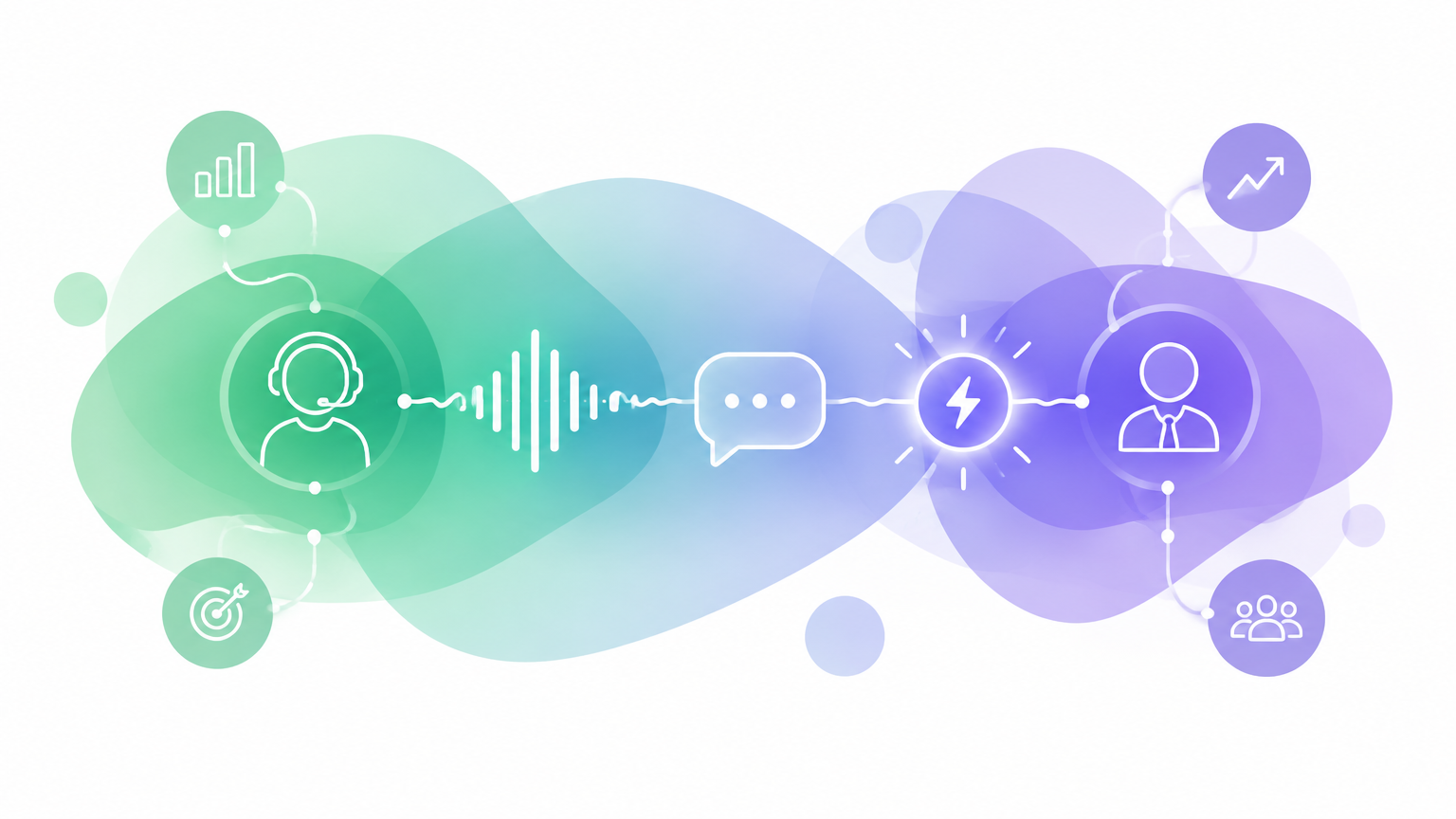
Short answer: real-time sales coaching tools listen to a live sales call and give the rep short, specific guidance while the buyer is still talking: a question to ask, an answer to a technical objection, or a reminder of what this buyer said last time. The best ones understand what the buyer meant rather than reacting to keywords, pull from your own playbook and CRM, and stay quiet unless they have something useful to say.
Most sales coaching still happens after the call. A manager reviews a recording on Friday, spots the moment the deal turned, and gives feedback the rep applies to the next call. That helps, but it can't save the conversation that just ended. Real-time coaching moves the help into the moment it's needed.
What is real-time sales coaching?
Real-time sales coaching (also called live call guidance or in-call coaching) is software that joins a sales call, transcribes it as it happens, and surfaces prompts on the rep's screen during the conversation.
Typical prompts look like this:
- A question to ask: "You're pitching. He hasn't named a problem yet. Back up."
- A technical answer: "SOC 2 is done. SSO ships with the enterprise tier."
- Context from past calls: "Dan opened 40 locations. Last call he pushed on multi-location onboarding."
Each one is short: a headline the rep can take in at a glance, sometimes with a line or two of detail. A rep can read it in a couple of seconds without losing the thread of the conversation.
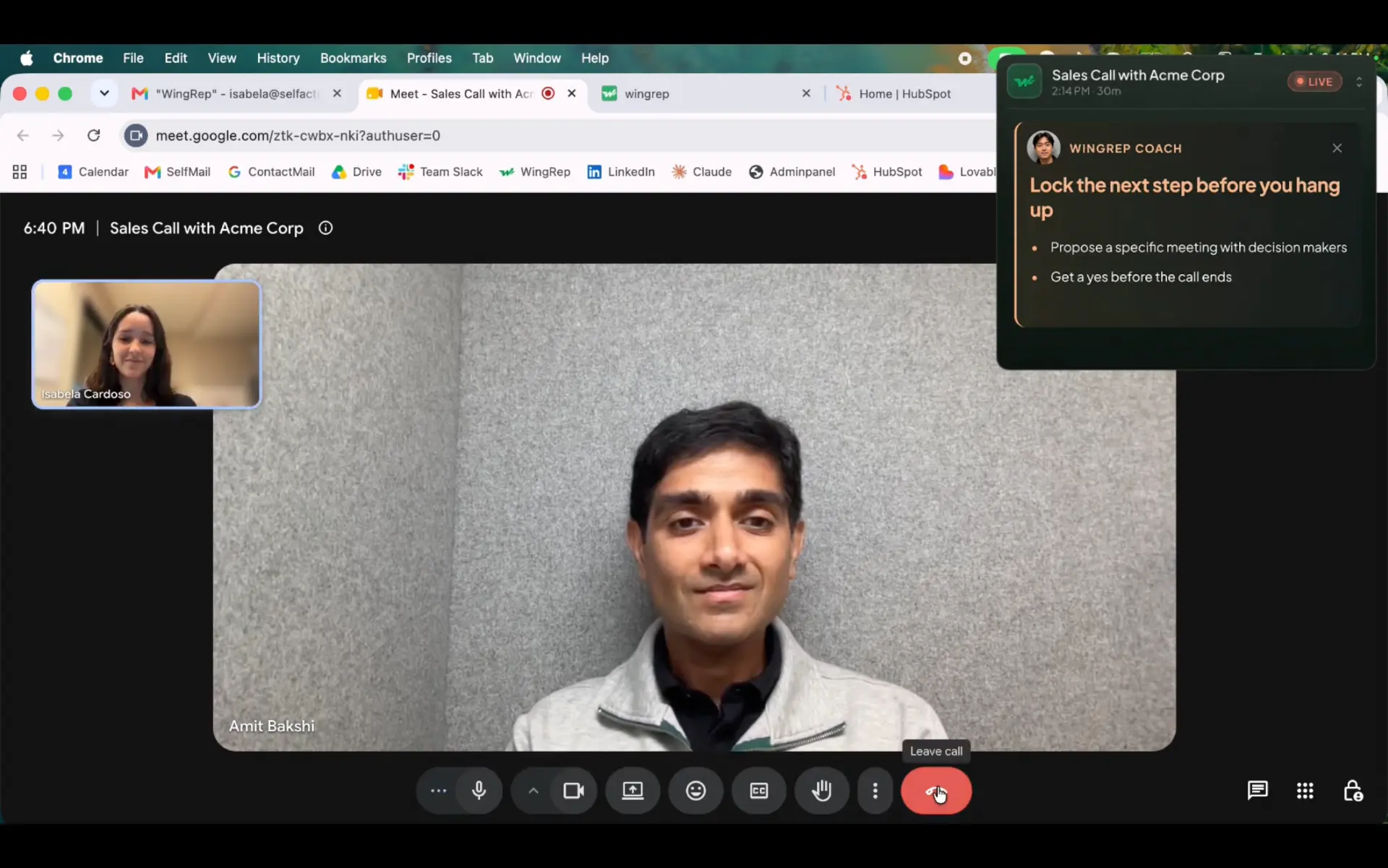
How does live in-call guidance work?
Under the hood, a good real-time system does four things in a loop:
- Detect. It transcribes the call and tracks where the conversation is: discovery, demo, pricing, objection. Detection has to be fast enough that the prompt arrives before the moment passes.
- Gather context. It pulls what matters for this buyer: your sales playbook, the CRM record, notes and past calls with the same account, and the deal stage.
- Decide. It chooses whether to say anything at all. Silence is the default. It only speaks when it has a specific, usable nudge.
- Learn. It tracks whether the rep used the nudge and what happened next, so future guidance gets sharper.
Keyword-triggered battlecards vs. conversation-aware guidance
Not all live tools work the same way. The biggest difference is what triggers a prompt.
| Keyword-triggered battlecards | Conversation-aware guidance | |
|---|---|---|
| What triggers it | A word or phrase is spoken ("pricing", a competitor name) | What the buyer actually meant, in context |
| What the rep sees | A generic card written for every deal | A specific nudge for this buyer and this moment |
| Where the content comes from | A static library | Your playbook, CRM and past calls with this buyer |
| How often it fires | Every time the keyword appears | Only when it has something useful to say |
| Risk | Pop-up fatigue; reps learn to ignore it | Needs good CRM and calendar access to be accurate |
Keyword triggers are easy to build and easy to ignore. If a rep sees the same pricing card every time a buyer says "budget", they stop looking. Guidance that understands the conversation earns trust because it is right more often.
What happens before and after the call?
Live guidance works best when it's part of a full workflow, not a standalone pop-up.
- Before the call (about 10 minutes ahead): research on the account and the people joining, plus the playbook that fits this deal.
- During the call: live nudges for questions, objections and technical answers.
- After the call (within about 2 minutes): a drafted follow-up email and an updated CRM record, ready for the rep to review and send.
When the same system handles all three, the guidance during the call knows what was prepared before it, and the follow-up captures what actually happened.
Is live AI guidance distracting for reps?
It can be, if it fires constantly. That's the most common reason reps turn these tools off. Three design choices make the difference:
- Silence by default. No prompt is better than a generic one.
- Readable at a glance. A clear headline the rep can act on in a couple of seconds, with detail only when it helps.
- Grounded in the team's own material. Reps trust guidance that sounds like their playbook and their deal, not a generic script.
Who benefits most from real-time sales coaching?
- New reps who don't yet know the answers to common objections or technical questions. Live guidance shortens ramp because they get the right question, answer and proof point in the moment.
- Reps selling technical products without a sales engineer on every call. In security and infrastructure sales, the technical answer often arrives after the call, not in it. Live guidance helps close that gap.
- First-line managers with 10 to 30 reps who can't join every call but still own the number.
How WingRep does real-time coaching
WingRep gives every seller an always-on sales performance team of five seats, in the order a call happens: the Researcher prepares every meeting, the Strategist brings the right playbook, the Coach guides you in the moment, the Specialist answers the hard questions, and the Assistant handles the follow-up.
Most live tools fire generic battlecards at reps the moment a keyword is spoken. WingRep interprets what the prospect actually said, then digs through your personalized playbook, your CRM, and past calls with this buyer. It stays quiet until it has something specific to say, so every nudge is one the rep can use.
"It's a second brain," says Amit Bakshi, co-founder and CEO of WingRep.
WingRep responds in under two seconds, works with Zoom, Google Meet and Microsoft Teams, connects to Salesforce and HubSpot, and adds to Gong if your team already records calls there. Sean Collins, VP Sales at TBConsulting, closed a $1.6M Red Hat deal in three meetings instead of the usual five to seven.
See how live nudges work on the real-time page, or try WingRep free for 30 days, no credit card required.
FAQ
What tools give live coaching during sales calls?
Real-time sales coaching tools join the call, transcribe it live, and show reps prompts as the conversation happens. They differ mainly in what triggers a prompt (keywords vs. understanding the conversation) and where the guidance comes from (a static library vs. your own playbook, CRM and call history).
Is real-time sales coaching the same as conversation intelligence?
No. Conversation intelligence records and analyzes calls afterward, mainly for managers. Real-time coaching acts during the call, for the rep. Many teams use both.
Can real-time coaching work with Gong?
Yes. Teams on Gong can keep their recordings and add live guidance on top. WingRep imports Gong calls so past conversations inform future nudges.
Does the buyer see the guidance?
No. Nudges appear only on the rep's screen. With the WingRep desktop app, nothing joins the meeting, so there's no extra participant on the call. Teams that prefer a visible notetaker can use the WingRep call bot instead. Either way, follow your company's call recording and consent policy.
How fast does live guidance need to be?
Fast enough that the prompt arrives while the moment is still open, which in practice means within a couple of seconds of the buyer finishing their point.
WingRep is the AI sales performance team that puts this into practice on real calls: it preps the rep beforehand, nudges them live when the hard question lands, and writes the CRM update and follow-up afterwards.