Constructive Tension in Sales: What It Means and What It Doesn't
Push the idea, not the person. The distinction that decides whether the rest of the model works.

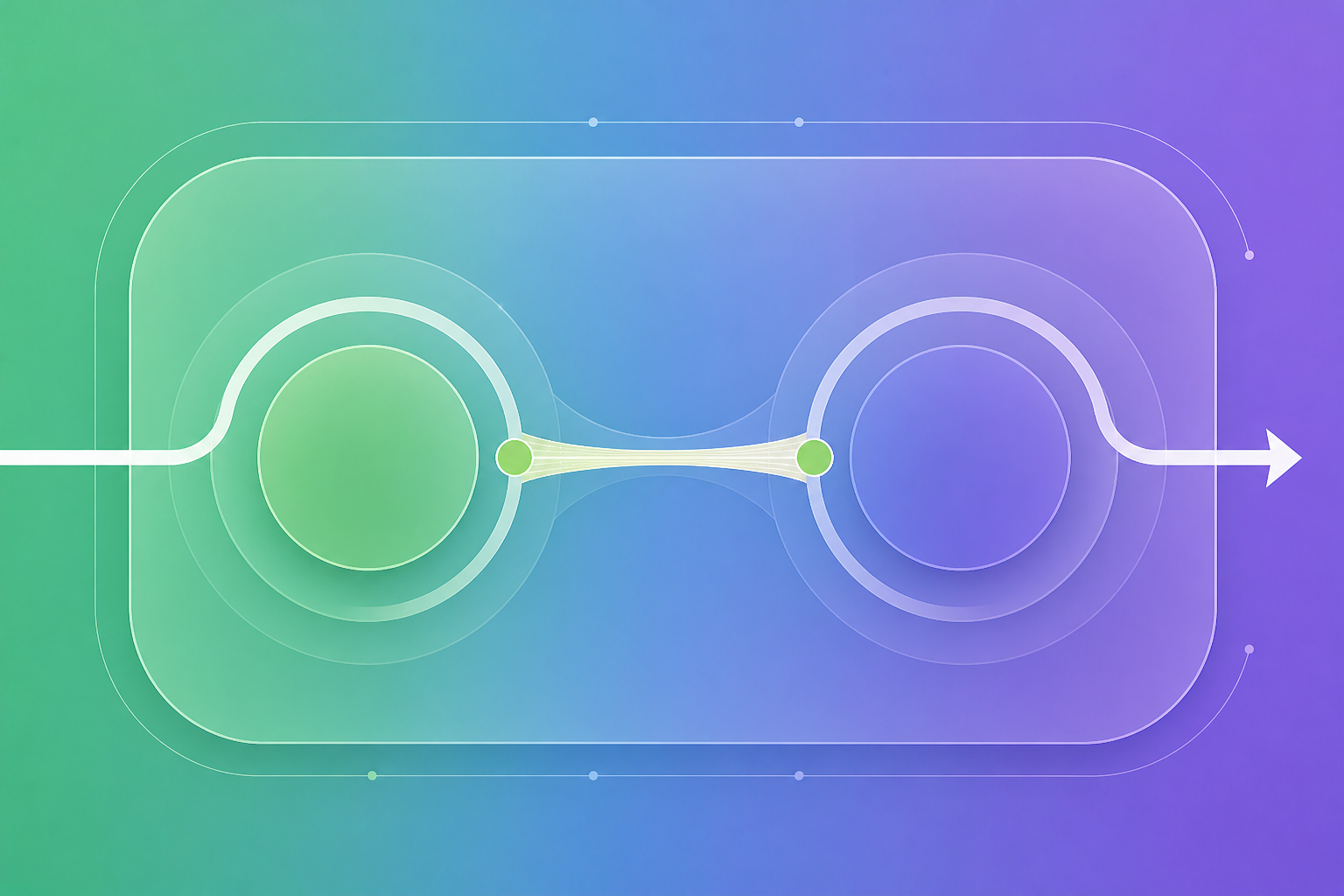
Constructive tension is the productive discomfort a customer feels when they realize their current situation is worse than they thought. CEB's own description from 2011 contrasts it with Relationship Builders, "who seek to resolve tension throughout the sale," while Challengers "maintain a certain amount of constructive tension across the sale" to keep it moving.
The concept is small enough to explain in a paragraph and gets misapplied so consistently that Challenger Inc runs a standing FAQ item on it. When the company selling the training has to publish an explainer saying this doesn't mean be confrontational, you learn something about how the training lands.
What is constructive tension in sales?
Constructive tension is the discomfort a buyer feels between where they are and where they should be, created deliberately by the seller and held open rather than resolved. Challenger Inc's current definition calls it "the productive discomfort that helps customers question the status quo." Their next sentence is the one people skip: "It is not aggression or confrontation."
The mechanism is straightforward. A buyer who is comfortable does nothing. Comfort is the default state of every account with a functioning incumbent process, and doing nothing is the most common outcome of a B2B sales cycle. Something has to make staying put feel worse than moving.
Constructive tension is that something. It is manufactured discomfort with a specific target, and the target is not the person you're talking to.
Is constructive tension the same as being aggressive?
No. Aggression puts pressure on the person. Constructive tension puts pressure on the idea the person currently holds, which is the distinction Harvard Business Review drew when it introduced the model. Challenger Inc's own phrasing for the distinction is "push the idea, not the person." The Challenger Sale draws the same line between assertive and aggressive, describing Challengers as showing a "willingness and ability to stand their ground when the customer pushes back."
This is, in our view, the single most common way teams get Challenger wrong. It's not close.
The pattern is predictable. A team goes through Challenger training. Reps come away with permission to disagree with customers, which is genuinely the point. What they don't come away with is an insight worth disagreeing about, because insight production is a marketing job the company hasn't staffed. So the rep pushes without anything behind the push, and the customer experiences confidence with no content, which is indistinguishable from being handled.
Then the deal goes quiet and everyone concludes Challenger doesn't work in their market.
The order matters more than the intensity. Teaching earns you the standing to hold a position. A rep who has genuinely reframed a customer's problem can say "I don't think that's the real issue" and be thanked for it. A rep who hasn't earned that can say the exact same sentence and get walked to the elevator.
Where does the tension actually sit?
Not between the seller and the buyer. The tension lives inside the buyer, between their current situation and the one they'd be in if the problem were solved. The seller's job is to surface that gap and keep it visible long enough for the buyer to act on it, which means the seller and the buyer are on the same side of it.
This is the part almost everyone misses, and getting it backwards changes every behavior downstream.
If you believe the tension is between you and the customer, you'll try to win. You'll treat their objection as a position to be defeated, you'll hold your ground on things that don't matter, and you'll read a hard question as resistance.
If you believe the tension is inside the customer, you'll do the opposite. You'll ask the hard question yourself. You'll be the one saying the number out loud. You'll treat their discomfort as evidence the reframe landed instead of evidence you pushed too far. And you'll stop backing off the moment they frown, which is the reflex that kills more Challenger conversations than aggression ever has.
Same word, two completely different jobs.
How does constructive tension show up in a Challenger pitch?
Constructive tension is generated in the middle of the six-part teaching pitch and released only at the end. The Warmer establishes credibility, the Reframe creates the gap, Rational Drowning quantifies it, and Emotional Impact makes it personal. The book describes the arc as leading customers "first to a rather dark place" before showing them the way out.
Mapped against the six-part pitch, the tension has a shape:
- The Warmer. No tension yet. You're demonstrating you understand their world.
- The Reframe. Tension starts here. Their known problem turns out to connect to a bigger one they hadn't linked it to. The tell is some version of "I never thought of it like that."
- Rational Drowning. Tension peaks. This is the number, in their currency, over a defined period. Most reps soften it. Softening it is the mistake.
- Emotional Impact. Tension holds. A story about a company like theirs, told so they recognize themselves in it.
- A New Way. Tension starts to resolve, but toward a change rather than toward your product. Naming your product here collapses the whole arc back into a sales pitch.
- Your Solution. Resolution.
The structural point worth taking away: the tension is created before your product appears and resolved by the change rather than by the purchase. A rep who introduces their solution during Rational Drowning has converted the customer's discomfort about their business into discomfort about being sold to. Those feel similar in the room and produce completely different outcomes.
Why do Relationship Builders struggle with this?
Because relieving tension is the job they think they're doing. CEB's original framing puts the two profiles in direct opposition: Relationship Builders "seek to resolve tension throughout the sale." The instincts that make them well-liked, being generous with time and smoothing over friction, are the same instincts that remove the discomfort a decision needs.
In CEB's data, Relationship Builders were 7% of high performers across all sales and 4% in complex sales, the weakest of the five profiles on both measures. You can read that number two ways, and only one of them is useful.
The unhelpful reading is that relationships don't matter. That's not what the research says, and it contradicts the study the whole thing grew out of, which found 53% of B2B customer loyalty comes from the sales experience itself.
The useful reading is narrower. Being liked is an output. A Relationship Builder optimizes for it directly, and in doing so removes the mechanism that turns a good meeting into a decision. Customers genuinely enjoy working with them and genuinely don't buy, which is the most frustrating pattern a sales manager ever has to diagnose, because nothing in the call recording sounds wrong.
More on that profile and how to coach it in why relationship building isn't enough.
When does constructive tension backfire?
On existing customers. Corporate Visions ran experimental research finding that a provocative, challenging message used with existing customers during renewal or expansion increased the risk of losing them to a competitor by at least 10% compared with a message that reinforced the status quo.
The logic is clean once you see it. Challenger was built for acquisition, where the enemy is the prospect's attachment to their current way of doing things and your job is to break it. In a renewal, you are the current way of doing things. Teaching a customer that their status quo is broken, when you are their status quo, is an argument for change that you will lose.
Corporate Visions cites a 2024 Forrester figure that 73% of B2B revenue comes from existing customers, which is the reason this matters commercially rather than academically.
Disclosure, because it's relevant: Corporate Visions is a direct competitor of Challenger Inc and sells the alternative approach. The research is motivated. We're citing it anyway for a specific reason: it is experimental, with a control condition, which is more than the original Challenger study offers. Motivated research with a control beats unmotivated research without one.
Our practical read: run tension on acquisition, run reinforcement on renewal, and make sure your CSMs and AMs weren't sent to the same training as your new-business AEs without anyone flagging the difference. That mistake is common and expensive.
Is constructive tension one of the official Challenger skills?
It depends which era you're citing. Modern Challenger Inc materials list constructive tension as a fourth core skill alongside teach, tailor and take control. In the 2011 book it runs through all three as connective tissue rather than appearing as a separate labelled skill. Both descriptions are defensible. They're describing different vintages.
Small thing, but it matters if you're writing training material or citing a source. "The four Challenger skills" is today's curriculum from the licensee. "The three Challenger behaviors" is the book. We'd footnote whichever you use.
Which vintage you're citing turns out to matter for the numbers too. We traced how the percentages got scrambled in what the Challenger research actually found.
Where does WingRep fit?
Tension is a real-time skill, which is what makes it hard to coach. A manager listening to a recording a week later can hear that a rep backed off, but the rep can't feel it anymore. In the moment, backing off felt like being considerate.
WingRep is on the call while it's happening. When a rep is at the point in a conversation where the cost of doing nothing should be said out loud and the conversation is drifting toward next steps instead, that's a moment where a prompt is worth more than a coaching session. It also prepares the rep beforehand with the account context the reframe depends on, since tension with nothing behind it is exactly the failure mode described above.
Our per-seat price is published on our pricing page, or you can see how WingRep works on a live call.
Common questions
What is constructive tension in the Challenger Sale?
The productive discomfort a customer feels between their current situation and where they should be, created deliberately by the seller and held rather than resolved. CEB's 2011 definition contrasts Challengers, who maintain it across the sale, with Relationship Builders, who work to resolve it.
Is constructive tension the same as pressure selling?
No. Constructive tension targets the customer's idea about their own situation. Pressure selling targets the person and the timeline. Challenger Inc's phrasing for the distinction is "push the idea, not the person," and the book separates assertive behavior from aggressive behavior.
How do you create constructive tension on a sales call?
Reframe a problem the customer thinks they understand, quantify what it costs them in their own numbers, and resist resolving the discomfort until they've felt it. The tension should be created before your product is mentioned and resolved by the change required rather than by the purchase.
Does constructive tension work with existing customers?
The evidence says be careful. Corporate Visions found experimentally that provocative messaging used on existing customers during renewal raised the risk of losing them by at least 10% versus a status quo reinforcement message. In an expansion conversation, you are the status quo. Note that Corporate Visions competes with Challenger Inc.
Is constructive tension a fourth Challenger skill?
In current Challenger Inc materials, yes. In the 2011 book it works as connective tissue across teach, tailor and take control rather than as a separate named skill. If you write "the four Challenger skills," you're describing today's curriculum rather than the original book.
Sources
- CEB press release, November 2011: prnewswire.com
- Adamson, Dixon & Toman, "The End of Solution Sales," Harvard Business Review, July/August 2012: hbr.org
- Dixon & Adamson, "Selling Is Not About Relationships," HBR, September 2011: hbr.org
- Challenger Inc, selling profiles: challengerinc.com
- Riesterer / Corporate Visions on the Challenger model: corporatevisions.com
- Capon, "Revisiting The Challenger Sale," Velocity 17(3), January 2015: business.columbia.edu
- Penguin Random House, book page: penguinrandomhouse.com
WingRep is the AI sales performance team that puts this into practice on real calls: it preps the rep beforehand, nudges them live when the hard question lands, and writes the CRM update and follow-up afterwards.